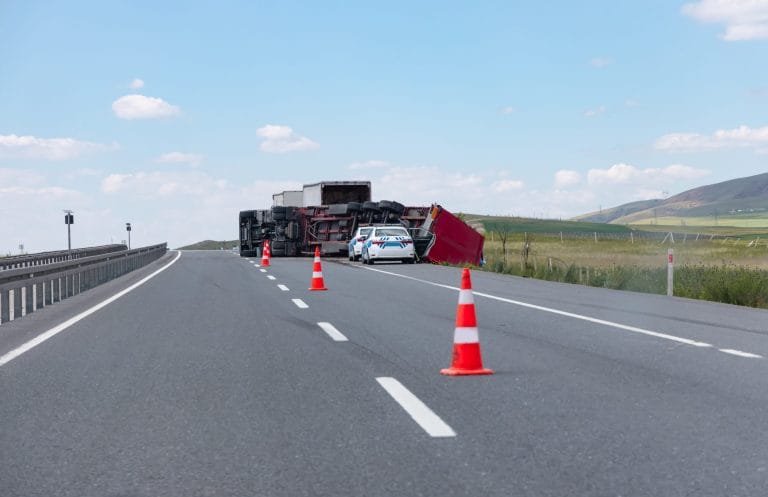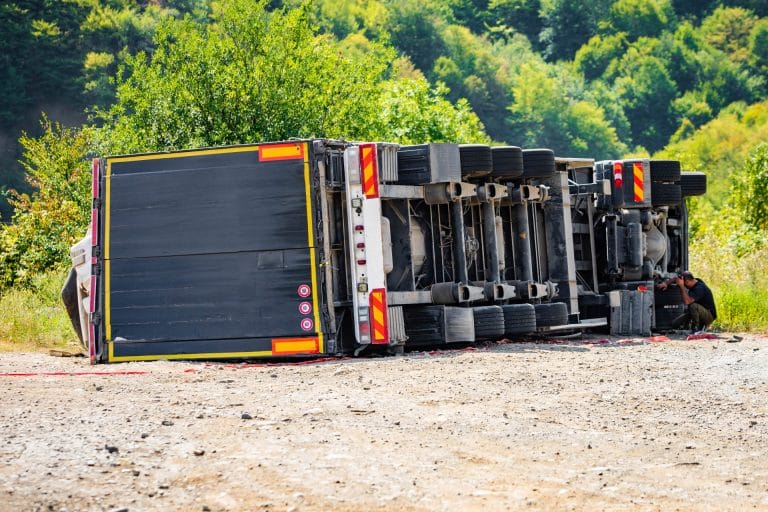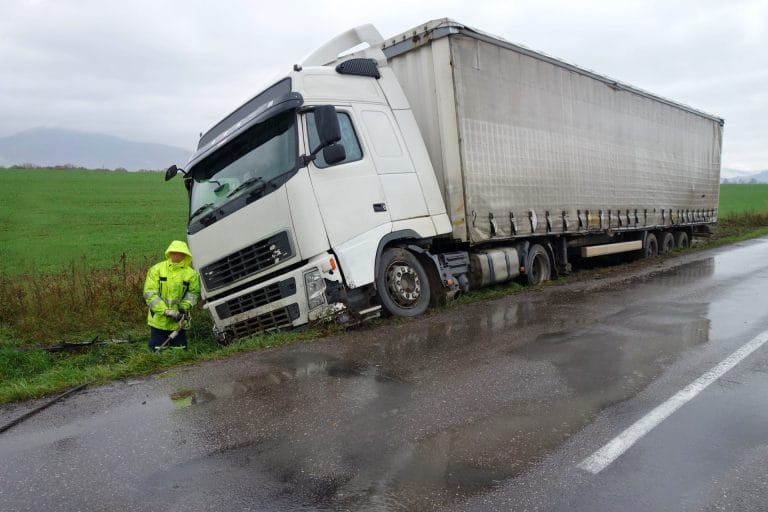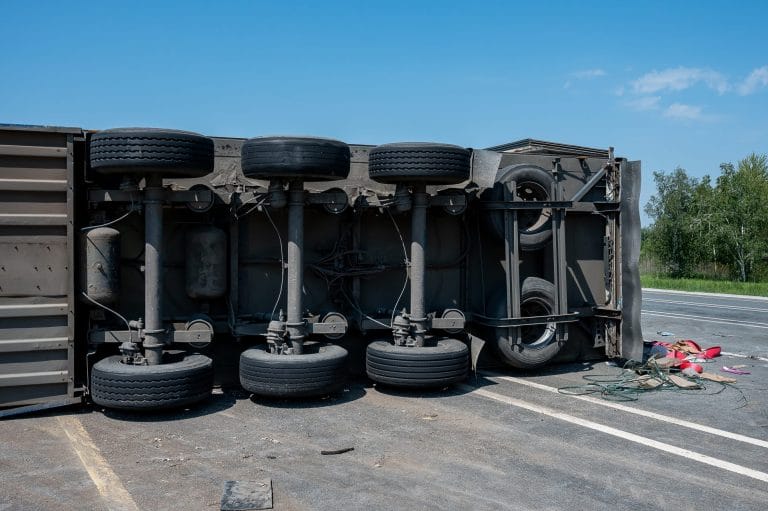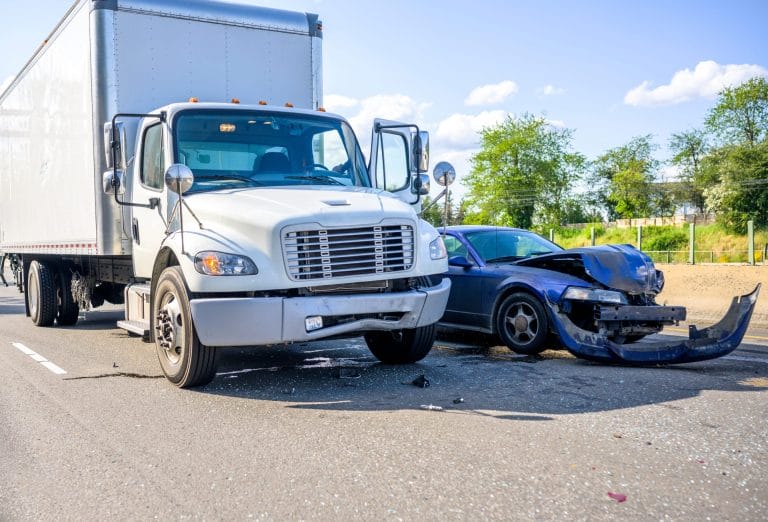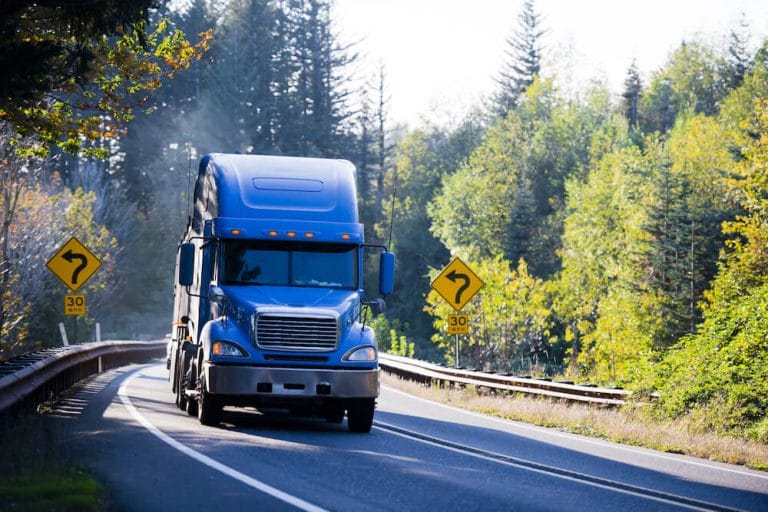
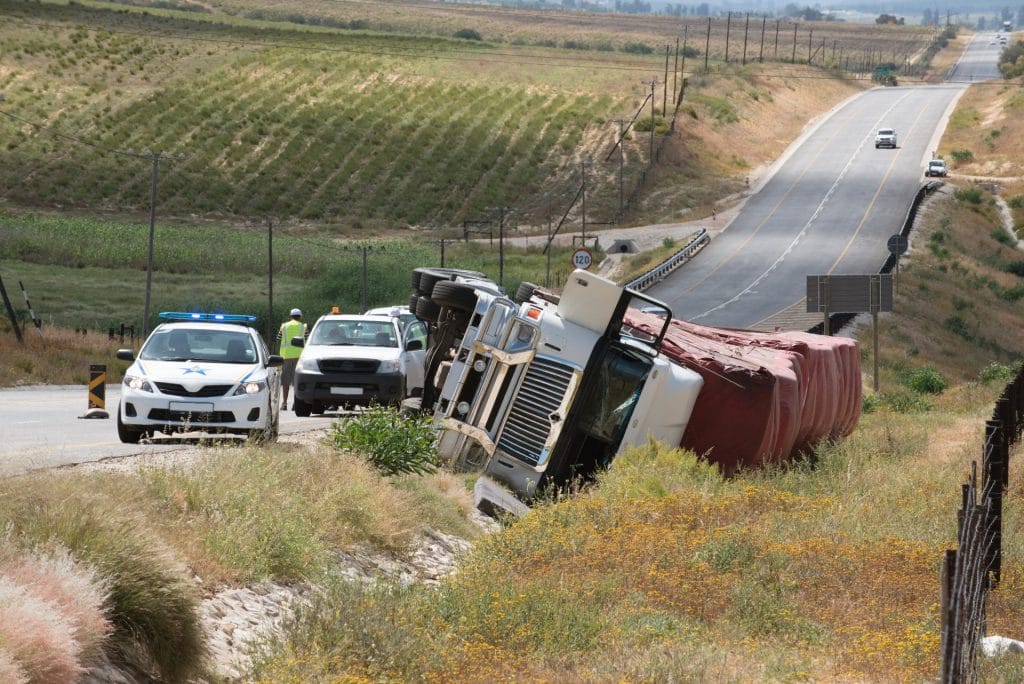
Truck accident personal injury claims are fundamentally different from typical auto accident cases. Commercial truck drivers and trucking companies operate under strict state and federal regulations, and violations of those rules can dramatically affect liability.
Truck drivers must complete specialized training and hold a commercial driver’s license (CDL). Even so, a single mistake by a truck driver can place everyone on the road in immediate danger.
Why Truck Accidents Are More Dangerous Than Car Accidents
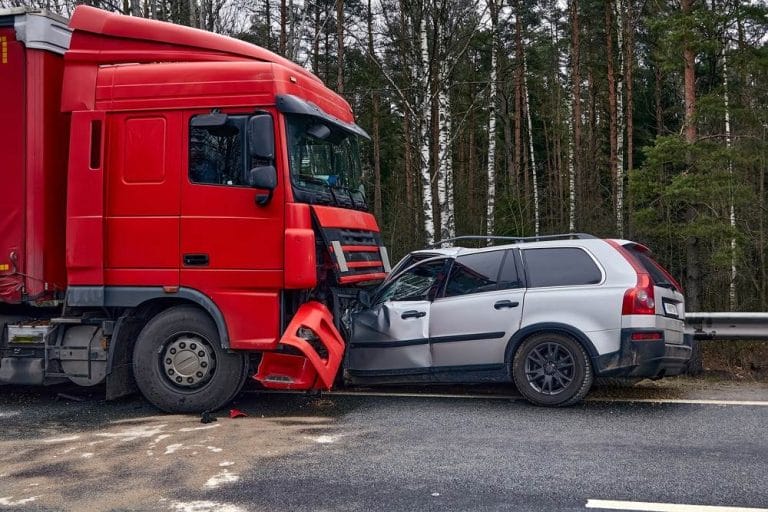
Even when empty, a semi-truck and trailer can weigh up to 40,000 pounds. Bringing a vehicle of that size to a sudden stop is extraordinarily difficult. At highway speeds, an out-of-control tractor-trailer can span multiple lanes of traffic, placing nearby motorists at extreme risk.
Drivers and passengers in smaller vehicles struck by a semi-truck often suffer catastrophic, life-altering injuries or fatal trauma.
Why Trucking Is So Heavily Regulated
The Federal Motor Carrier Safety Administration (FMCSA), operating under the U.S. Department of Transportation, closely regulates truck drivers, trucking companies, and subcontractors for a reason. Each year in the United States, thousands of truck accidents result in more than 2,500 fatalities involving occupants of cars and smaller vehicles.
Key Differences Between Truck Accident and Auto Accident Claims
Successfully pursuing a truck accident claim requires knowledge of specialized regulations and an understanding of how liability differs from standard auto accident litigation.
- Violations of FMCSA regulations may establish liability even if the truck driver was not entirely at fault for causing the accident.
- Truck drivers are legally required to maintain detailed logbooks documenting driving time, rest periods, and sleep.
- Commercial drivers are subject to a lower blood alcohol content limit (.04) than most passenger vehicle drivers (.08).
Multiple parties—including maintenance providers, repair contractors, and other subcon